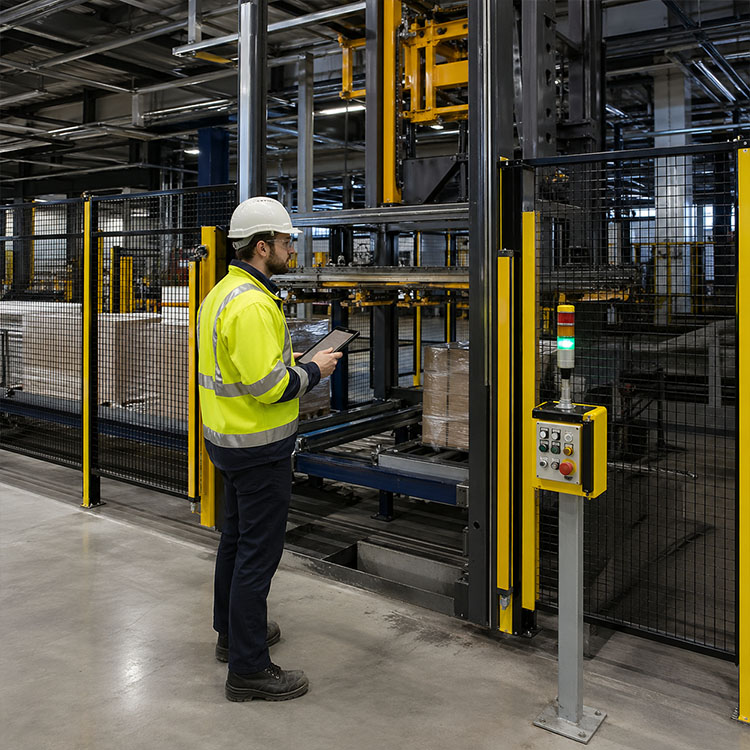
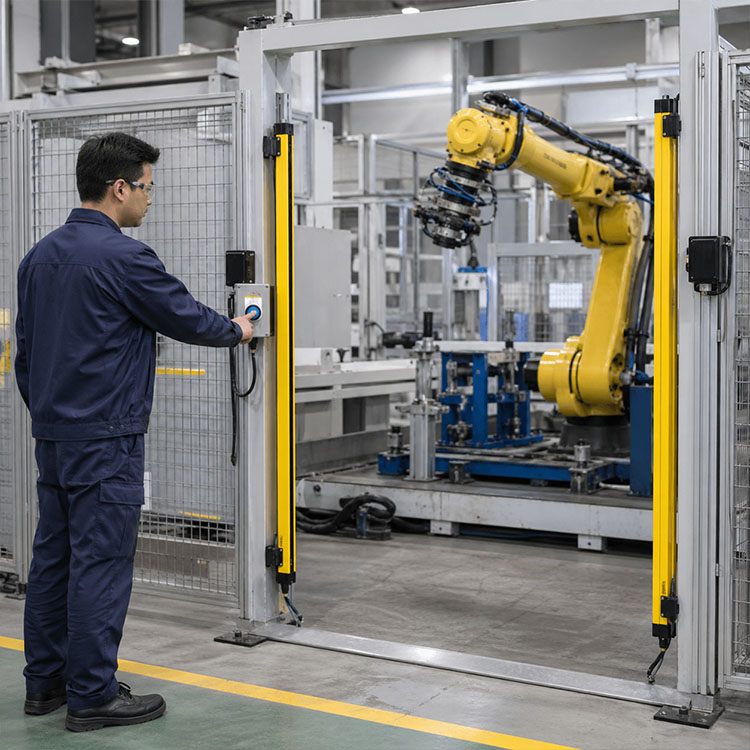
Precisa da cortina de luz de segurança certa para a sua máquina?
Indique-nos o seu tipo de máquina e os seus requisitos de proteção. A nossa equipa de engenharia ajudá-lo-á a selecionar uma cortina de luz de segurança, um sensor ou um lidar de segurança adequados ao seu projeto.
Obter apoio para:
Projectos de cortinas de luz de segurança standard e personalizados
Necessidades de atualização de OEM, integração, distribuição e fábrica
Seleção de produtos com base na disposição da máquina, gama de deteção, saída e ambiente
Uma cortina de luz de segurança pode ter ópticas de Tipo 4, cablagem de 24 VDC, saídas OSSD duplas, feedback EDM, conectores M12, deteção de dedos de 10 mm e um ecrã HMI bem organizado, mas se o comportamento de reiniciar e reiniciar for preguiçoso, toda a máquina pode tornar-se uma armadilha de responsabilidade. Porque é que os compradores continuam a perguntar apenas sobre o espaçamento dos feixes e o preço?
Começarei por dizer a parte impopular: a maior parte das más instalações de cortinas de luz não são más porque o emissor e o recetor são baratos. São más porque alguém tratou a reinicialização como uma reflexão eléctrica posterior em vez de uma função de segurança.
Índice
A verdadeira questão não é “manual ou automático?” É “Quem pode criar movimento?”
As barreiras ópticas de segurança são dispositivos de proteção com sensores de presença utilizados para detetar o acesso a uma área perigosa e enviar saídas de segurança, frequentemente sinais OSSD, para parar ou impedir o movimento perigoso da máquina. Na conceção prática de uma máquina, o modo de reinicialização decide o que acontece depois de o feixe ser libertado, e essa decisão pode separar um reinício controlado de uma investigação de acidente desagradável.
Esta é a parte que as brochuras de vendas subestimam.
Uma cortina de luz de segurança de rearme manual requer normalmente um comando de rearme deliberado depois de o campo de deteção estar limpo. Uma cortina de luz de segurança de rearme automático elimina automaticamente a condição de paragem assim que os feixes deixam de ser interrompidos. A conceção de uma cortina de luz de segurança de rearme automático vai mais longe: pode permitir que o ciclo da máquina ou o movimento perigoso seja retomado após a eliminação da área de proteção, dependendo da arquitetura de controlo.
E é nesta última que eu fico teimoso.
A regra da OSHA relativa às prensas mecânicas diz que um dispositivo de deteção de presença no ponto de funcionamento deve ser interligado no circuito de controlo para impedir ou parar o movimento da corrediça quando uma parte do corpo se encontra no campo de deteção; diz também que o dispositivo não pode ser utilizado como meio de disparo para iniciar o movimento da corrediça, exceto ao abrigo dos requisitos específicos de PSDI previstos no 29 CFR 1910.217(h). A mesma regra apresenta a conhecida fórmula da distância de segurança da imprensa dos EUA: Ds = 63 polegadas/segundo × Ts.
Esta fórmula não é decorativa. É uma admissão de que o corpo humano se move rapidamente, as máquinas param tarde e os diagramas eléctricos optimistas não protegem as mãos.
Para os compradores que ainda estão a escolher a camada de hardware, o ponto de partida mais seguro é selecionar entre um verdadeiro gama de produtos de cortinas de luz de segurança e, em seguida, conceber a função de reposição em função do perigo e não da conveniência da cablagem.
Reinicialização manual: O modo que eu defenderia primeiro
A reposição manual é a predefinição em que confio quando uma pessoa pode entrar, alcançar ou permanecer dentro da zona protegida.
Nem sempre. Mas frequentemente.
Um bloqueio adequado do rearranque da cortina de luz deve obrigar o operador a efetuar uma ação consciente de rearranque após a interrupção ter sido removida. Essa reposição não deve, por si só, iniciar um movimento perigoso. Deve repor a função de segurança num estado de prontidão. O arranque deve ser separado.
Pequena distinção? Não.
É a diferença entre “a proteção está livre” e “a máquina pode mover-se”. Eu não gostaria de explicar essa distinção pela primeira vez depois de uma amputação.
A reposição manual deve ser efectuada em células robotizadas, prensas hidráulicas, prensas dobradeiras, paletizadores, transportadores com acesso pedonal, máquinas de armazenamento vertical, zonas de acesso a vários lados, células de soldadura, máquinas de embalagem com ângulos mortos e qualquer sistema em que uma pessoa possa ultrapassar o plano de deteção.
Se o botão de reposição estiver montado num local onde o operador não consegue ver a zona de perigo, não me interessa o aspeto bonito do painel. Desloque-o, adicione confirmação de zona, utilize vários pontos de reposição ou redesenhe a proteção.
O secção de normas de segurança das máquinas é a referência interna correta quando a conversa começa a desviar-se de “Que modelo?” para a ISO 13849, IEC 61496, nível de desempenho, prevenção de reinício e provas de validação.
A regra rígida para a reposição manual
A reposição deve confirmar que a área de proteção está livre. Não deve comandar o movimento.
Isto significa que a cadeia de controlo tem normalmente o seguinte aspeto:
O operador limpa a zona → os OSSDs da cortina de luz ficam prontos → o operador carrega no reset a partir de uma posição verificada → o relé de segurança ou o PLC de segurança aceita o reset → o comando de arranque separado inicia o movimento.
Se o botão de reiniciar se puder tornar um botão de arranque oculto, a sua conceção já é fraca.
Reinicialização automática: Útil, mas muitas vezes sobrevalorizado
A reposição automática pode ser legítima quando a cortina de luz não está a proteger um espaço onde uma pessoa pode permanecer sem ser detectada depois de atravessar os feixes.
Pense na ejeção de pequenas peças, janelas de fluxo de material, aberturas controladas onde o acesso ao corpo não é credível ou aplicações em que o campo de proteção só é interrompido transitoriamente e o perigo não pode recomeçar numa pessoa.
Mas a reposição automática é abusiva.
Já vi especificações escritas desta forma: “É preferível a reinicialização automática para reduzir o tempo de inatividade.” Esta frase deveria fazer um engenheiro de segurança contorcer-se. O tempo de inatividade não é a primeira variável. A exposição é que é.
Uma cortina de luz de segurança de reinicialização automática pode ser adequada quando a avaliação de risco prova que a limpeza dos feixes não deixa uma pessoa dentro da zona de perigo e não permite um movimento perigoso inesperado. Por exemplo, uma abertura de alimentação estreita com restrições físicas pode justificar um comportamento de reposição diferente de uma célula robotizada de entrada.
Para estruturas de máquinas apertadas onde o espaço é verdadeiramente limitado, opções de cortinas de luz de segurança compactas pode fazer sentido. Mas o hardware compacto não desculpa o pensamento compacto. A lógica de reinício ainda tem de corresponder ao perigo.
Reinício automático: O atalho que parece eficiente até não o ser
O reinício automático não é o mesmo que a reposição automática.
A reposição automática significa que o dispositivo de segurança regressa a um estado de prontidão quando a obstrução é removida. O reinício automático significa que o movimento perigoso pode ser retomado automaticamente quando as condições desaparecem. Esta diferença é enorme e é onde muitos engenheiros, compradores e diretores de produção falam entre si.
O rearranque automático pode ser aceitável em situações limitadas e projectadas. Também pode ser imprudente.
A questão é brutalmente simples: poderá uma pessoa estar dentro, atrás, por baixo, ao lado ou para além do campo de deteção quando a máquina reiniciar?
Se sim, pare de defender o reinício automático.
O U.S. Bureau of Labor Statistics (Gabinete de Estatísticas do Trabalho dos EUA) indicou 2,5 milhões de lesões e doenças não fatais no local de trabalho na indústria privada em 2024, com uma taxa total de casos registáveis de 2,3 casos por cada 100 trabalhadores equivalentes a tempo inteiro. Não se trata de uma estatística que se limita a uma cortina de luz, mas é o pano de fundo operacional para todas as decisões relativas à segurança das máquinas.
E as mortes ainda não são abstractas. O BLS registou 5 070 acidentes de trabalho mortais nos Estados Unidos em 2024, com um trabalhador a morrer a cada 104 minutos devido a um acidente de trabalho.
Por isso, não, não aceito “mas a produção quer um reinício mais rápido” como um argumento sério de segurança.
Comparação do modo de reinicialização para cortinas de luz de segurança
Reiniciar o projeto
O que faz
Onde se encaixa melhor
Risco principal
A minha opinião
Cortina ótica de segurança de rearme manual
Requer uma reposição deliberada depois de o feixe ter desaparecido
Prensas, células robotizadas, paletizadores, zonas de passagem, pontos de acesso de alto risco
Má localização da reinicialização ou reinicialização a duplicar como início
Melhor predefinição para o acesso do pessoal
Cortina de luz de segurança com reinicialização automática
Regressa ao estado de pronto quando o campo é apagado
Aberturas de acesso limitado, pequenas janelas de material, baixo risco de armadilhagem
Assume que ninguém permanece na zona de perigo
Útil, mas frequentemente utilizado em excesso
Design de reinício automático
Permite que o movimento da máquina seja retomado automaticamente após a eliminação das condições
Apenas casos de processos rigorosamente controlados com exposição validada de não-pessoas
Movimento inesperado após o acesso
De alto risco, a menos que se prove a sua segurança
Reiniciar o interbloqueio
Impede o reinício até que ocorra uma sequência de reinicialização/arranque separada
Qualquer máquina em que uma pessoa possa entrar ou permanecer no seu interior
Validação deficiente, reinicialização remota, estação de reinicialização cega
Não negociável em caso de guarda séria
Cortina ótica de segurança OSSD com EDM
Utiliza saídas de segurança duplas e monitorização de feedback de dispositivos externos
Máquinas de alto risco que utilizam contactores, relés de segurança, PLCs de segurança
EDM ignorado ou com fios apenas para visualização
Boa conceção quando validada
Os resultados OSSD não são um feitiço mágico
OSSD significa Output Signal Switching Device (dispositivo de comutação de sinal de saída). Nas cortinas de luz de segurança, as saídas OSSD são saídas de comutação com classificação de segurança que comunicam estados seguros ou não seguros a um relé de segurança, controlador de segurança ou PLC de segurança.
Mas aqui está a parte que ninguém gosta de ouvir: OSSD não significa automaticamente que a máquina é segura.
A cortina de luz de segurança OSSD apenas pode comunicar o seu estado. Não pode reparar um contactor soldado se o feedback EDM não for concebido corretamente. Não pode parar uma prensa hidráulica com rapidez suficiente se a medição do tempo de paragem estiver errada. Não pode impedir o abuso de bypass se a manutenção mantiver um jumper de reserva no armário. Não pode validar a localização de um reset.
Uma saída de segurança é um componente. A função de segurança é o sistema.
O NIOSH alertou há décadas para o facto de as lesões causadas por prensas mecânicas poderem causar amputações graves; o seu Current Intelligence Bulletin 49 refere que as estatísticas da OSHA de 1975 a 1983 revelaram que 49% das lesões causadas por prensas mecânicas resultaram em amputações.
Dados antigos? Sim.
Continua a ser relevante? Dolorosamente.
Porque a física da máquina não se tornou mais educada só porque a caixa do sensor é mais fina.
Para prensas pesadas, aberturas de acesso largas e condições de instalação mais difíceis, um cortina de luz para máquinas pesadas deve ser avaliada com o tempo de paragem, a distância de montagem, a vibração, a estabilidade do alinhamento, a estrutura de saída e o método de reposição num único pacote. Comprar a cortina primeiro e fazer as contas de segurança depois é um passo atrás.
O caso Matsu mostra por que razão os pormenores da reposição são importantes
Os processos judiciais são aborrecidos até deixarem de o ser.
Na decisão do OSHRC de Matsu Ohio, o registo discutia o trabalho na prensa em que os trabalhadores penetravam nas cortinas de luz durante a colocação da matriz e tarefas relacionadas. A decisão refere que, se um trabalhador tivesse penetrado na cortina de luz e outro trabalhador tentasse reiniciá-la, a cortina de luz não poderia ser reiniciada e a prensa permaneceria inoperacional.
Este é o tipo de pormenor que interessa aos investigadores.
Não é a foto do catálogo. Não a cor do recetor. Nem a frase de marketing sobre “resposta rápida”. O que lhes interessa é saber se a máquina pode ser reiniciada com uma pessoa exposta, se o circuito de segurança falhou em segurança, se a energia pode chegar à embraiagem e se a sequência de reinicialização faz sentido em condições reais de trabalho.
O mesmo ponto aparece no material de variação da Gestamp West Virginia de 2021 da OSHA, em que o reinício após o acesso exigia uma inspeção visual, um interrutor de reinicialização, o fecho da porta numa janela de 3-4 segundos, a ativação do interrutor de chave e a ativação da HMI.
Não se trata de “carregar no botão reset”.”
Trata-se de um controlo processual em torno do controlo técnico, porque as pessoas podem morrer no intervalo entre os dois.
O local de reinicialização é a prova
Um botão de reset é uma testemunha.
Quando ocorre um incidente, o dispositivo de reinicialização informa os investigadores de quem poderia reiniciar a máquina, onde essa pessoa se encontrava, o que podia ver e se a conceção previa uma verificação humana ou uma confiança cega.
Não gosto de reinicialização remota para proteção de acesso, a menos que o sistema tenha uma razão muito forte e um ficheiro de validação para corresponder. Um rearme a partir de uma HMI do outro lado da linha pode ser ótimo para diagnósticos. Pode ser terrível para uma célula robotizada onde alguém pode estar atrás do dispositivo.
É por isso que o tema se sobrepõe à monitorização de PLC e de rede. Um bit de estado não é uma função de segurança. Um painel de controlo não é uma estação de reset. Uma mensagem Ethernet não é uma prova de que a zona de perigo está vazia.
Se o seu projeto inclui reinicialização HMI, diagnóstico EtherNet/IP, etiquetas PLC de segurança, indicadores prontos para reinicialização ou confirmação remota, leia o guia mais aprofundado do site sobre Monitorização do estado do PLC e conformidade com a reposição Ethernet antes de decidir a arquitetura.
Como escolheria o melhor modo de reinicialização para cortinas de luz de segurança
Comece com a pior exposição credível e não com o melhor cenário de produção.
Pode uma pessoa entrar na área protegida? Utilize a reposição manual com bloqueio de reinício.
Uma pessoa pode atravessar o feixe e ficar dentro da zona de perigo? Utilize a reposição manual, a verificação local e, eventualmente, a deteção de presença adicional no interior da célula.
A cortina de luz está a proteger apenas um pequeno ponto de alimentação onde a entrada do corpo está bloqueada pela geometria? A reposição automática pode ser defensável.
Poderá a limpeza do feixe reiniciar imediatamente o movimento perigoso? Considerar o reinício automático como culpado até prova em contrário.
A máquina utiliza contactores, válvulas ou accionamentos que podem falhar de forma perigosa? Utilize EDM, monitorização com classificação de segurança, STO quando apropriado, e testes de validação.
A instalação envolve expectativas ISO 13849-1 PL d ou PL e, dispositivos IEC 61496 Tipo 4, arquitetura SIL 2 ou SIL 3, zonas de muting, blanking ou cascata? Documente tudo. Dados de tempo de paragem, distância de segurança, comportamento de reposição, cablagem OSSD, feedback EDM, resposta a falhas, regras de bypass e testes de reinício devem constar do ficheiro.
Aqui está a arquitetura de reposição da cortina de luz de segurança mais limpa que eu defenderia:
Utilizar a cortina de luz de segurança apenas para a deteção. Utilizar OSSDs duplos num relé de segurança ou num PLC de segurança. Utilizar feedback EDM quando contactores ou relés externos controlam energia perigosa. Utilizar um botão de reset localizado com uma visão clara da área protegida. Exigir um comando de arranque separado após o reset. Registar o estado do dispositivo no PLC ou HMI, mas não deixar que a lógica padrão do PLC se torne a autoridade para a proteção do pessoal.
Simples? Sim.
É esse o objetivo.
Quanto mais complicado for um esquema de reinicialização, mais agressivamente ele precisa de validação. Se o projeto incluir muting, blanking, zonas de robôs, servo-accionamentos, pinças pneumáticas, movimento hidráulico ou múltiplos pontos de acesso, parta do princípio de que alguém o interpretará mal durante a manutenção às 2:00 da manhã.
E desenhar para essa pessoa.
Para layouts de máquinas invulgares, alturas de proteção especiais, montagem lateral, cablagem não normalizada, comportamento de saída dupla ou ambientes agressivos, a engenharia personalizada pode ser o caminho certo. soluções de cortinas de luz de segurança não normalizadas.
FAQs
O que é a reposição manual de uma cortina de luz de segurança?
O rearme manual de uma cortina de luz de segurança é uma função de prevenção de rearranque que requer uma ação deliberada de rearme depois de a área de proteção ter sido interrompida e depois apagada, para que a máquina não regresse automaticamente a um estado pronto a funcionar sem a verificação do operador e uma sequência de segurança controlada.
Em termos simples, a reposição manual separa “o feixe está livre” de “a máquina pode funcionar”. É normalmente a escolha mais segura quando uma pessoa pode entrar, alcançar ou permanecer dentro da área protegida.
O que é a reinicialização automática de uma cortina de luz de segurança?
A reinicialização automática numa cortina de luz de segurança é um modo de reinicialização em que a saída de segurança regressa automaticamente à sua condição de pronto depois de a obstrução sair do campo de deteção, sem necessitar de um botão de reinicialização separado, desde que o resto do sistema de controlo permita esse comportamento.
A reposição automática pode ser aceitável para aberturas de material de acesso limitado ou interrupções de processos em que uma pessoa não pode permanecer na zona de perigo. É muito mais difícil de defender em células, prensas ou grandes pontos de acesso.
É permitido o rearranque automático da cortina de luz de segurança?
O rearranque automático da cortina de luz de segurança é uma conceção de controlo em que o movimento perigoso pode ser retomado automaticamente depois de o campo de deteção desaparecer, e só é defensável quando a avaliação de risco prova que nenhuma pessoa pode ficar exposta e as normas da máquina, a distância de segurança, a lógica de rearranque e os registos de validação suportam esse comportamento.
Eu trataria o reinício automático como um caso especial e não como uma caraterística predefinida. Se a abertura protegida permitir o acesso humano, o rearranque automático pode criar movimentos inesperados e graves riscos.
O que é um bloqueio de arranque da cortina de luz?
Um interbloqueio de reinício da cortina de luz é uma função de controlo de segurança que impede que o movimento perigoso da máquina reinicie automaticamente depois de a cortina de luz ter sido interrompida, forçando uma sequência de reinício ou arranque que verifica se a área protegida está livre antes de o equipamento poder retomar o funcionamento.
Um bloqueio de reinício é especialmente importante em células robotizadas, prensas, transportadores, paletizadores e máquinas com ângulos mortos. Não se trata apenas de um bit de software; faz parte da função de segurança.
Como se repõe uma cortina de luz de segurança?
Para reiniciar uma cortina de luz de segurança, primeiro limpe o campo protegido, verifique se a área perigosa está vazia, corrija qualquer condição de falha e, em seguida, prima o dispositivo de reinicialização aprovado para que o relé de segurança ou o controlador de segurança aceite a reinicialização sem iniciar diretamente o movimento perigoso.
O método exato depende do modelo, da cablagem OSSD, do relé de segurança ou do PLC de segurança, do feedback EDM, do estado de falha e do modo de reinício. Nunca contorne o circuito de reinicialização para “pôr a produção a andar”.”
Qual é o melhor modo de reposição para as cortinas de luz de segurança?
O melhor modo de rearme para as cortinas de luz de segurança é normalmente o rearme manual com interbloqueio de rearme quando o pessoal pode aceder à zona de perigo, enquanto que o rearme automático pode ser adequado apenas para aberturas com restrições, em que a avaliação de risco prova que nenhuma pessoa pode ficar exposta depois de os feixes estarem desimpedidos.
A minha opinião é clara: escolha a reinicialização manual, a menos que possa defender a reinicialização automática com geometria, dados de tempo de paragem, análise de acesso, diagramas de cablagem e testes de validação.
Os seus próximos passos
Não selecionar a caixa de verificação Repor comportamento de um catálogo.
Antes de aprovar a conceção de reinicialização manual, reinicialização automática ou reinício automático para cortinas de luz de segurança, documente o tipo de máquina, o ponto de perigo, o tempo de paragem, a distância de segurança, a resolução, a altura de proteção, a estrutura de saída OSSD, o requisito EDM, o local de reinicialização, a visibilidade da zona de perigo e a sequência de reinício.
Se estiver a construir uma nova máquina, a reequipar uma prensa, a proteger uma célula robotizada ou a tentar limpar um projeto de reinício automático arriscado, envie o seu esquema, tensão, tipo de saída, gama de deteção, distância de montagem e expectativas de reinício através do Página de pedido de orçamento de cortinas de segurança. A pergunta correta não é: “Qual é a cortina de luz mais barata?” A pergunta correta é: “Qual a conceção de reposição que ainda parecerá defensável após um incidente?”