Precisa da cortina de luz de segurança certa para a sua máquina?
Indique-nos o seu tipo de máquina e os seus requisitos de proteção. A nossa equipa de engenharia ajudá-lo-á a selecionar uma cortina de luz de segurança, um sensor ou um lidar de segurança adequados ao seu projeto.
Obter apoio para:
Projectos de cortinas de luz de segurança standard e personalizados
Necessidades de atualização de OEM, integração, distribuição e fábrica
Seleção de produtos com base na disposição da máquina, gama de deteção, saída e ambiente
Quando uma prensa de 200 toneladas, uma tesoura hidráulica, uma célula de forjamento ou uma linha de paletização suja tem energia armazenada suficiente para punir uma má suposição, o modelo mais barato de uso geral não é “suficientemente bom”; é um passivo com uma etiqueta de sensor.
Defenderia essa escolha depois de uma amputação?
Pergunto isto sem rodeios porque já vi este erro ser disfarçado de “normalização”, “controlo de custos” e “mesma produção, preço mais baixo”. Belas palavras. Má engenharia. A cortina de luz de segurança não é selecionado por hábito de catálogo. É selecionado pelo risco: tempo de paragem da máquina, direção de acesso, espaçamento dos feixes, altura da proteção, resistência do invólucro, classificação IP, lógica de reposição, vibração, luz ambiente, superfícies reflectoras e o comportamento desagradável de operadores reais sob pressão de produção.
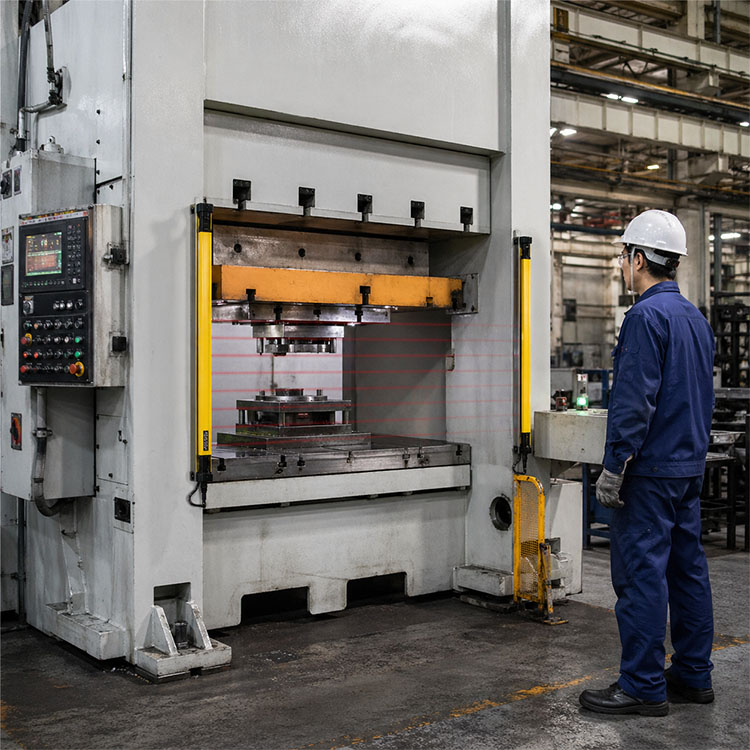
A OSHA tem sido invulgarmente clara sobre este ponto. O seu guia de proteção de máquinas diz que um dispositivo de deteção de presença deve impedir ou parar a pressão normal da prensa quando uma parte do corpo entra no campo de deteção, e avisa que as cortinas de luz perimetrais com um maior espaçamento entre canais não podem ser tratadas como proteção de ponto de operação para dedos e mãos. Esta distinção é importante quando um comprador tenta utilizar uma cortina “universal” em todo o lado.
Índice
A dura verdade: os modelos de uso geral são muitas vezes comprados pela razão errada
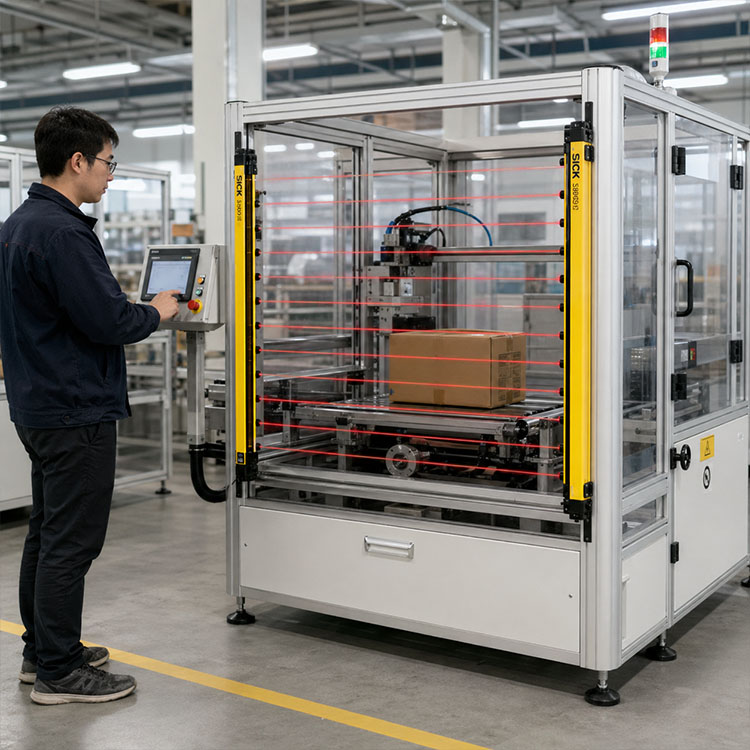
A cortina de luz para uso geral não é um mau dispositivo. No sítio certo, é prático, acessível e de integração simples. Em máquinas de embalagem, transportadores, células de automação ligeira e pontos de acesso padrão, um cortina de luz de uso geral pode fazer exatamente o que a avaliação de risco lhe pede.
Mas a última frase é a armadilha: “o que a avaliação de risco lhe pede para fazer”.”
Já vi equipas saltarem essa etapa e comprarem apenas pelo espaçamento das vigas. 20 mm? Parece seguro. NPN duplo? Suficientemente bom. DC24V? Funciona com o painel. Depois, a máquina treme, a névoa de líquido de refrigeração assenta na lente, uma empilhadora beija o poste, o operador passa uma fita adesiva sobre um disparo incómodo e, de repente, a especificação em papel parece muito pequena ao lado do perigo real.
A aplicação de uma máquina pesada muda as regras. Estamos a falar de prensas, máquinas de estampar, equipamentos hidráulicos, linhas de dobragem, grandes máquinas para trabalhar madeira, equipamentos alimentados por pórticos e células de automatização onde o perigo não é teórico. O cortina de luz para máquinas pesadas A categoria existe porque estas máquinas exigem mais tolerância física e menos desejo.
Onde uma cortina de luz de segurança para serviço pesado ganha
A cortina de luz de segurança para trabalhos pesados é melhor quando o ambiente da máquina é abusivo, a zona de acesso é ampla, o comportamento de paragem é implacável ou o dispositivo de proteção será exposto a vibrações, impactos, humidade, poeira, névoa de óleo, aparas de metal, ruído eletromagnético ou a manobras do operador.
Esta é a resposta correta.
Agora a resposta prática: os modelos para máquinas pesadas tendem a fazer sentido quando o dispositivo de proteção tem de permanecer alinhado e legível na fábrica real, e não apenas durante o teste de aceitação. Se a estrutura da sua máquina vibra, se a distância de deteção ultrapassa as normas das máquinas pequenas, se as equipas de manutenção removem as protecções com frequência, se a área necessita de diagnóstico digital ou se a instalação se situa perto de prensas hidráulicas, equipamento de estampagem ou equipamento de manuseamento de materiais de grandes dimensões, prefiro sobre-especificar a cortina de luz do que explicar mais tarde um ferimento evitável.
Veja os números. Os exemplos de produtos para máquinas pesadas da Cortina de Segurança incluem configurações como Espaçamento entre vigas de 10 mm, Alcance de 0-3 m, DC24V±10%, 3-15 ms / <15 ms tempo de resposta, Proteção IP68, e um Corpo de 35 mm × 50 mm com ecrã digital num modelo de proteção dos dedos. Outro modelo de máquina pesada utiliza Espaçamento de 20 mm, Alcance de 0-6 m, Saída NPN dupla, IP68, e o mesmo formato de carroçaria pesada. Não se trata de diferenças estéticas, mas sim de pistas sobre o ambiente de funcionamento previsto.
Compare isso com um exemplo de uso geral usando Espaçamento de 40 mm, 0-3,5 m a DC24V, 0-2,8 m a DC12V, NPN duplo, Tempo de resposta de 3-15 ms, IP65, e IEC61496-1/2 Classe II. Isso pode ser perfeitamente válido para a proteção do braço numa máquina de menor risco. Mas eu não transferiria automaticamente essa mesma lógica para uma prensa hidráulica só porque a ordem de compra parece mais limpa.
Cortinas de luz para máquinas pesadas versus cortinas de luz para uso geral: A mesa do comprador
Fator de decisão
Cortina de luz para máquinas pesadas
Cortina de luz para uso geral
A minha opinião
Ajuste típico da máquina
Prensas hidráulicas, máquinas de estampar, equipamento de grandes dimensões, células de alta resistência
Máquinas de embalagem, transportadores, estações de trabalho automatizadas standard
Corresponder à violência da máquina, não ao orçamento do comprador
Tolerância ambiental
Frequentemente selecionado para vibração, humidade, sujidade, risco de impacto e abuso de serviço mais longo
Frequentemente selecionado para áreas industriais mais limpas e mais leves
A realidade das plantas supera o otimismo dos catálogos
Exemplos de proteção
Proteção dos dedos de 10 mm, proteção da palma da mão de 20 mm, alcances de 0-3 m ou 0-6 m, opções IP68
Proteção do braço de 40 mm, 0-3,5 m a DC24V, exemplos IP65
A resolução deve corresponder ao risco da parte do corpo
Expectativa de habitação
Maior, mais resistente, mais tolerante a instalações exigentes
Estrutura mais pequena ou normalizada para montagem de rotina
A falha de montagem não deixa de ser uma falha de segurança
Melhor caso de utilização
Máquinas pesadas, acesso de alto risco, ambientes agressivos, zonas de proteção mais amplas
Proteção quotidiana das máquinas sempre que a avaliação de riscos o justifique
“Uso geral” não significa “uso em todo o lado”
Risco de aquisição
Custo unitário mais elevado, menor risco quando corretamente especificado
Custo inicial mais baixo, maior risco de utilização indevida em perigos graves
Sensores baratos tornam-se provas caras
Os ficheiros de casos que ninguém nas vendas quer discutir
A indústria tem o mau hábito de falar de dispositivos de segurança como se fossem acessórios. Não são. São provas.
Em maio de 2023, o Departamento do Trabalho dos EUA afirmou que a United Hospital Supply enfrentava $498,464 em sanções propostas pela OSHA depois de um trabalhador ter sofrido a amputação de três dedos no seu primeiro dia; a OSHA afirmou que os supervisores e os empregados tinham deliberadamente contornado a cortina de luz de uma prensa dobradeira. Isto não é um “pequeno problema de instalação”. É a versão de pesadelo do desvio normalizado.
Também existem provas mais antigas, que continuam a parecer uma etiqueta de aviso. Numa investigação da OSHA que envolveu a John Deere Ottumwa Works, uma prensa de travagem equipada com uma cortina de luz continuou a funcionar depois de a prensa e a cortina de luz terem sido desligadas, mas o interrutor principal ter permanecido ligado; o dedo do trabalhador foi amputado e a OSHA detectou um interrutor de pé avariado. A lição é dura mas útil: uma cortina de luz não é uma auréola mágica à volta de um sistema de controlo avariado.
E a base de dados de acidentes da OSHA não é propriamente silenciosa. Uma pesquisa por “Light Curtain” mostrou 115 resultados de acidentes, incluindo 2024 incidentes fatais e uma entrada de 2022 descrita como “Empregado amputa vários dedos devido a uma falha na cortina de luz”. Esta frase deveria deixar qualquer engenheiro de fábrica desconfortável.
Por isso, sim, tenho uma opinião forte: se uma fábrica está a debater se o modelo de máquina pesada é “excessivo”, alguém deveria perguntar primeiro se o modelo de uso geral é insuficiente.
Quando o modelo de uso geral ainda é a escolha mais inteligente
Nem todas as máquinas precisam de uma cortina de luz de segurança para máquinas pesadas. O excesso de especificação desperdiça dinheiro, complica o planeamento de peças sobresselentes e pode incomodar os operadores se o dispositivo for demasiado sensível para o fluxo de trabalho real.
Utilize um modelo de uso geral quando a máquina estiver relativamente limpa, a zona de acesso for moderada, a distância de paragem for verificada, o perigo for menor, a montagem for estável e o tipo de proteção necessário for claramente o acesso ao braço ou ao corpo, em vez da proteção do ponto de funcionamento ao nível dos dedos. Um transportador de embalagem normal não é uma prensa de estampagem. Uma estação ligeira de recolha e colocação não é uma célula de conformação hidráulica. Tratá-los da mesma forma é engenharia preguiçosa.
Para as equipas que ainda estão a separar o risco do Tipo 2, Tipo 4, Classe II, PL, SIL e risco real da máquina, o guia interno mais aprofundado sobre Cortinas ópticas de segurança do tipo 2 e do tipo 4 é uma próxima paragem útil. A minha versão direta: Tipo, resolução e alojamento são questões diferentes. Não as junte numa única resposta barata.
O gatilho do ambiente agressivo: Humidade, poeira, vibração e abuso
É aqui que vejo os compradores ficarem demasiado optimistas.
Um vídeo FAT limpo não prova que a cortina de luz sobreviverá seis meses ao lado de névoa de refrigerante, óleo hidráulico, poeira de soldagem, spray de lavagem, tráfego de empilhadeiras e operadores que são pagos para atingir os números de produção. Se a humidade fizer parte do ambiente de funcionamento, considere seriamente uma cortina de luz de segurança à prova de água em vez de fingir que o IP65 e uma limpeza cuidadosa resolvem tudo.
Se o acesso vier de mais do que um lado, não empilhe dispositivos aleatórios e chame-lhe engenharia. A cortina de luz de proteção de acesso multifacetado pode simplificar o conceito de proteção em torno de células robóticas, grandes aberturas de máquinas e linhas automatizadas com vários caminhos de aproximação.
Pequeno pormenor. Grande consequência.
A OSHA renovou a sua Programa de ênfase nacional sobre amputações nas indústrias transformadoras sobre 26 de junho de 2025, A Comissão Europeia, através do seu programa de ação, está a preparar um programa de ação para as máquinas de fabrico que apresentam riscos de amputação, incluindo a proteção das máquinas e o controlo da energia perigosa durante o funcionamento, o serviço e a manutenção. O programa atualizado está previsto para ser executado durante cinco anos a partir da sua data de entrada em vigor. Isto diz-nos onde os reguladores ainda estão à procura.
O que eu verificaria antes de escolher o modelo
Eu não começaria pelo preço. Começaria por estas perguntas de campo:
A máquina é capaz de esmagar, cortar, dobrar, cisalhar, perfurar ou prender uma mão antes de a paragem estar concluída?
Qual é o tempo de paragem da máquina medido, e não o adivinhado?
Que parte do corpo necessita de proteção: dedo, palma da mão, braço ou acesso a todo o corpo?
Qual é a distância de segurança necessária depois de considerar o tempo de resposta, a velocidade de aproximação e a geometria da instalação?
A cortina de luz será sujeita a vibração, impacto, líquido de refrigeração, pó, névoa de óleo, água, metal refletor ou oscilação de temperatura exterior?
Um operador pode alcançar à volta, por baixo, por cima ou entre o campo protegido e o perigo?
Serão utilizados muting, blanking, interbloqueio de reinício, monitorização de dispositivos externos ou integração relé/PLC?
A quem pertence a validação após a instalação? OEM, integrador, utilizador final ou ninguém?
Esta última resposta assusta-me mais.
A bandeira vermelha do aprovisionamento: “Utilizamos um modelo em todo o lado”
A normalização é sedutora. Eu percebo. Menos SKUs. Mais fácil de armazenar. Formação mais limpa. Maior poder de compra.
Mas a segurança das máquinas não se preocupa com o seu sistema ERP.
Se um local utilizar a mesma cortina de luz de segurança de uso geral numa máquina de montagem de caixas de cartão, num pequeno dispositivo de montagem, numa prensa hidráulica e numa célula de carga suja, eu faria imediatamente uma auditoria. A pergunta correta não é: “Este modelo pode emitir um sinal de paragem?” A pergunta correta é: “Esta função de segurança específica pode reduzir este risco específico neste conjunto específico de condições de falha e utilização?”
O Gabinete de Estatísticas do Trabalho dos EUA informou 2,6 milhões de lesões e doenças não fatais no local de trabalho no sector privado em 2023, incluindo 946 500 casos de dias de ausência do trabalho. Este número alargado não é específico das cortinas de luz, mas dá a dimensão certa: as lesões não são erros contabilísticos raros. Continuam a ser um custo industrial quotidiano.
A minha regra de ouro para a seleção de máquinas pesadas
Se a máquina puder mutilar rapidamente, se o ambiente puder degradar a ótica ou o alinhamento, se a abertura de acesso for grande, se os operadores interagirem com o perigo todos os ciclos ou se o sistema precisar de uma resposta defensável após um incidente, inclino-me para uma cortina de luz para máquinas pesadas ou para uma configuração de proteção mais específica da aplicação.
Nem sempre. Muitas vezes.
A escolha final ainda precisa de uma avaliação de risco, medição do tempo de paragem, revisão da cablagem, revisão do local de reposição, revisão da montagem mecânica e validação em relação à utilização real da máquina. Mas eu prefiro defender uma cortina de luz industrial robusta antes do incidente do que explicar uma fraca depois.
FAQs
O que é uma cortina de luz para máquinas pesadas?
Uma cortina de luz para máquinas pesadas é uma cortina de luz de segurança robusta concebida para máquinas industriais de grandes dimensões, de elevada energia ou sujas, em que os longos alcances de deteção, a resistência à vibração, os invólucros mais fortes, os diagnósticos mais rápidos e a maior proteção ambiental são mais importantes do que o tamanho compacto ou o preço de compra mais baixo. É normalmente utilizada em torno de prensas, máquinas de estampagem, equipamento hidráulico e células de automatização exigentes.
Quando é que devo utilizar uma cortina de luz para máquinas pesadas em vez de um modelo de uso geral?
Utilize uma cortina ligeira para máquinas pesadas em vez de um modelo de uso geral quando a máquina tiver uma força elevada de esmagamento, corte, perfuração, dobragem ou aprisionamento e quando a instalação estiver exposta a vibrações, risco de impacto, poeiras, névoa de óleo, exposição à água, aberturas de acesso mais largas ou consequências de paragem mais graves. A decisão deve seguir a avaliação do risco e não a categoria do catálogo.
É sempre necessária uma cortina de luz de segurança do tipo 4 para máquinas pesadas?
Uma cortina de luz de segurança do tipo 4 não é automaticamente necessária para todas as máquinas pesadas, mas é frequentemente a escolha mais defensável quando a avaliação de risco exige uma maior tolerância a falhas, um desempenho de segurança mais forte e uma melhor deteção de falhas em aplicações de alta gravidade. A classificação do tipo, a resolução do feixe e o alojamento ambiental devem ainda ser avaliados separadamente.
Uma cortina de luz de uso geral pode proteger uma prensa dobradeira?
Uma cortina de luz de uso geral só pode proteger uma prensa dobradeira se a sua resolução, classificação de segurança, tempo de resposta, distância de segurança, posição de montagem, integração de controlo e lógica de reinicialização corresponderem ao risco do ponto de operação e cumprirem os requisitos de segurança da máquina aplicáveis. Na prática, muitas aplicações de prensas dobradeiras necessitam de uma seleção mais cuidadosa do que uma configuração normal de controlo de acesso.
Que informações devo dar a um fornecedor antes de selecionar uma cortina de luz de segurança?
Deve indicar ao fornecedor o tipo de máquina, a descrição do perigo, a altura de proteção necessária, o espaçamento entre feixes, o alcance da deteção, o tempo de paragem medido, a distância de montagem, a fonte de alimentação, o tipo de saída, a exposição ambiental, o método de reposição, o mercado-alvo e se é necessário silenciar, apagar, espelhar ou proteger o acesso a vários lados. Sem esses dados, a cotação é maioritariamente um trabalho de adivinhação.
Qual é a melhor cortina de luz para ambientes agressivos?
A melhor cortina de luz para ambientes agressivos é normalmente uma cortina de luz de segurança resistente ou à prova de água, com a classificação IP correta, caixa robusta, alinhamento estável, gama de deteção adequada, tempo de resposta verificado e configuração de saída adequada ao sistema de controlo de segurança. Para áreas húmidas ou de lavagem, a proteção do tipo IP67 ou IP68 deve ser analisada antecipadamente.
Os seus próximos passos
Não compre a próxima cortina de luz de segurança copiando a lista de materiais da última máquina.
Envie o tipo de máquina, o tamanho da abertura, a altura de proteção necessária, o objetivo de espaçamento do feixe, os dados de tempo de paragem, as fotografias de montagem, a tensão, as necessidades de saída e a exposição ambiental à equipa de engenharia antes de bloquear o modelo. Se a aplicação envolver uma prensa, uma máquina de estampar, um sistema hidráulico, uma área de lavagem ou uma zona de acesso a vários lados, solicite uma revisão do modelo em vez de uma rápida correspondência de preços.